What Is the Best Exhaust Fan for Washrooms?
Choosing the best Exhaust Fan For Washroom is not simply a matter of buying the loudest or cheapest model. A reliable fan should remove humid air, reduce mirror fog, and help protect walls, ceilings, and grout from persistent moisture. It must also suit the room’s size, duct length, outlet location, and daily use. A powerful fan can still perform poorly when its duct is crushed, too narrow, or filled with sharp bends.
Ventilation specialist Paul Raymer states, “The best ventilation system is one that people will actually use.” That practical point matters. A quiet fan with a timer or humidity sensor may work better than a stronger model that sounds like a small engine. Look for independently tested airflow, suitable cubic feet per minute, low sone ratings, and a backdraft damper. The installation details matter just as much as the product label.
This guide compares the features that deserve attention before purchase. It considers airflow, noise, energy use, controls, cleaning, and long-term reliability. It also examines common mistakes, such as venting moisture into an attic or selecting capacity without considering duct resistance. No model is perfect. Even an excellent fan can disappoint when installed badly. That is easy to overlook.
The right choice depends on more than brand reputation. It should match the washroom, the building, and the people using it. A thoughtful decision can create fresher air, fewer damp surfaces, and less maintenance over time.
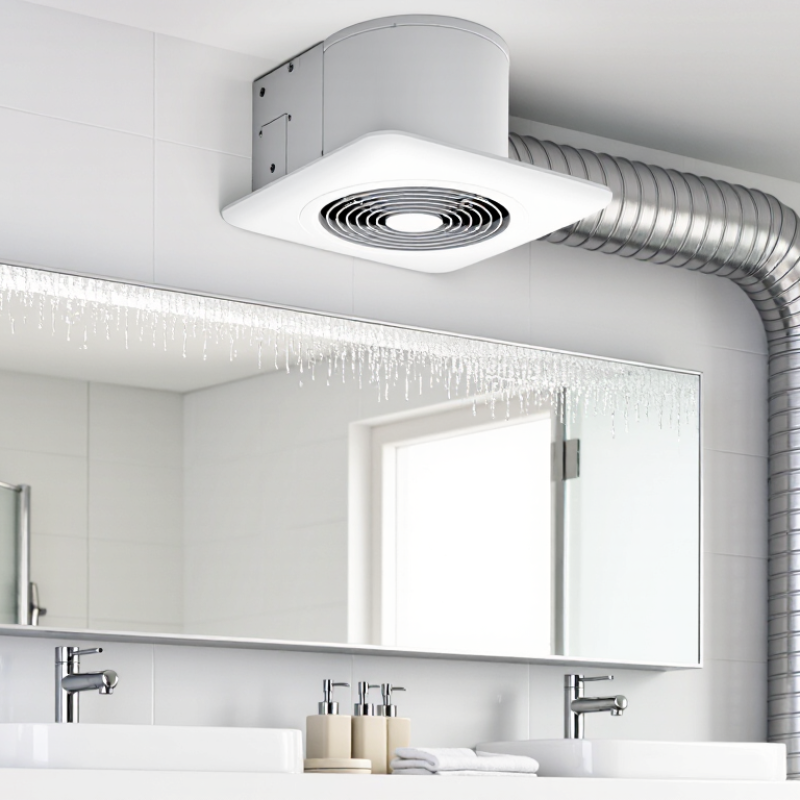
What Makes a Washroom Exhaust Fan Effective?
What Makes a Washroom Exhaust Fan Effective?
An effective washroom exhaust fan removes moisture at its source, not merely moving air around the ceiling. In practice, a fan can meet its airflow rating yet perform poorly through a long, narrow, or sharply bent duct. The grille may feel active, while condensation still gathers on the mirror.
ASHRAE Standard 62.2-2022 recommends at least 50 cubic feet per minute for intermittent bathroom exhaust, or 20 CFM for continuous operation. The Home Ventilating Institute also suggests about 1 CFM per square foot for bathrooms up to 100 square feet, with a 50 CFM minimum. These figures offer a useful starting point, not a guarantee. A larger room, frequent showers, or limited make-up air may require more capacity.
Duct design matters. Use a short, smooth route with minimal bends, and discharge outdoors through a backdraft damper. Otherwise, rated airflow can fall sharply. A timer or humidity sensor helps the fan run long enough after bathing. The U.S. Environmental Protection Agency recommends indoor relative humidity between 30% and 50%, which gives homeowners a practical moisture target.
Noise also affects daily use. If the fan is unpleasant, occupants may switch it off too soon. Certification data can compare airflow and sound under controlled conditions, but real installations remain different. That limitation deserves attention. A quieter fan with a proper duct may outperform a louder, stronger-looking unit.
Which Exhaust Fan Types Suit Different Washroom Layouts?
What Is the Best Exhaust Fan for Washrooms?
The best exhaust fan depends on the washroom layout, not just its airflow rating. For a compact ensuite with a short, straight duct, an axial fan is often practical and quiet. Its simple airflow path works well when resistance is low. For a large washroom, a centrifugal or mixed-flow fan handles longer ducts and several bends more effectively.
ASHRAE Standard 62.2 recommends 50 cubic feet per minute (CFM) for intermittent bathroom ventilation, or 20 CFM for continuous operation. HVI guidance also commonly uses 1 CFM per square foot for bathrooms up to 100 square feet, with a 50 CFM minimum.
A windowless washroom may need a timer or humidity sensor. These controls keep the fan running after a shower, when steam still clings to mirrors and ceiling corners. The calculation is useful, but not perfect.
Tips: Measure the duct length, count each elbow, and check the fan’s rated performance under resistance. Avoid placing the fan directly above a shower unless it is approved for that location.
A common mistake is choosing a powerful fan with an undersized duct. It may sound harsh and remove less moisture than expected.
In shared or elongated washrooms, two smaller extraction points can sometimes distribute airflow better than one central unit. I would check noise, backdraft protection, and service access before choosing the final model.
How to Install and Maintain a Washroom Exhaust Fan Properly
Choosing the best exhaust fan starts with the washroom’s size, moisture level, and duct route. Measure the room first. A suitable fan should provide enough airflow without creating harsh noise. A timer switch or humidity sensor can reduce dampness after bathing. Check the duct diameter before buying, because an adapter may restrict performance.
Installation needs careful planning. Turn off the circuit at the electrical panel before opening any wiring. Position the fan near the shower, but keep it outside direct water spray. Keep it accessible. The duct should travel as straight as possible toward an exterior vent. Seal every joint with approved foil tape, not ordinary cloth tape. Add a backdraft damper to prevent cold air, insects, and odors from entering. Never discharge moist air into an attic or wall cavity. Electrical connections should follow local codes and be completed by a qualified electrician. Do not guess.
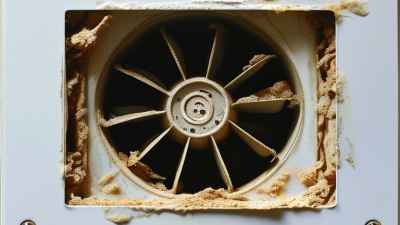
Maintenance is simple but often neglected. Clean the grille every month with a soft brush or vacuum. Inspect the duct outlet twice a year for lint, dust, or blocked airflow. Run the fan during bathing and for twenty minutes afterward. Listen for rattling, grinding, or slower operation. These signs may indicate a loose mounting screw or worn motor. I once assumed a noisy fan needed replacement, but a loose cover caused the vibration. That mistake was avoidable. Test the humidity sensor occasionally, since sensors can become less accurate in dusty rooms. Replace damaged vents, cracked seals, or exposed wiring promptly.
What Is the Best Exhaust Fan for Washrooms? - How to Install and Maintain a Washroom Exhaust Fan Properly
| Fan Type |
Typical Airflow |
Typical Noise |
Approx. Power Use |
Best Use |
Installation Requirements |
Maintenance Needs |
| Standard ceiling exhaust fan |
80–110 CFM (136–187 m³/h) |
1.5–3.0 sones |
15–35 W |
Most small and medium residential washrooms |
Connect to a properly sized duct that terminates outdoors; avoid exhausting into the attic or ceiling cavity. |
Clean the grille and fan blades every 3–6 months; inspect the duct outlet annually. |
| High-capacity ceiling fan |
110–150 CFM (187–255 m³/h) |
2.0–4.0 sones |
25–55 W |
Large washrooms, rooms with showers, or spaces with persistent condensation |
Requires adequate make-up air, a low-resistance duct route, and a correctly sized outdoor wall or roof cap. |
Check for vibration, loose fasteners, blocked grilles, and restricted duct airflow every 3–6 months. |
| Low-noise fan |
70–110 CFM (119–187 m³/h) |
Below 1.5 sones |
15–35 W |
Bedrooms near washrooms, guest areas, and noise-sensitive homes |
Use rigid or smooth ducting where possible and secure the housing to prevent structure-borne vibration. |
Keep the grille dust-free and verify that quiet operation is not caused by reduced airflow. |
| Humidity-sensing fan |
80–110 CFM (136–187 m³/h) |
1.5–3.0 sones |
15–40 W while operating |
Washrooms where users frequently forget to switch the fan on |
Provide permanent electrical power and set the humidity threshold according to the room’s normal humidity level. |
Clean the sensor area carefully; test automatic activation after cleaning and seasonal humidity changes. |
| Timer-controlled fan |
80–110 CFM (136–187 m³/h) |
1.5–3.0 sones |
15–40 W while operating |
Effective moisture removal after showers and baths |
Use a compatible timer switch or built-in timer; provide a neutral conductor if required by the control design. |
Confirm that the fan runs for approximately 20 minutes after showering and clean the grille regularly. |
| Wall-mounted exhaust fan |
70–120 CFM (119–204 m³/h) |
2.0–4.0 sones |
20–45 W |
Washrooms without accessible ceiling space or with short exterior wall routes |
Install through an exterior wall with weatherproof sealing, a backdraft damper, and an outdoor louver. |
Remove dust from the grille and check the exterior louver for lint, insects, snow, or other obstructions. |
| Continuous low-speed fan |
30–60 CFM (51–102 m³/h) continuous; 80–110 CFM boost |
Below 1.5–2.5 sones |
5–25 W, depending on speed |
Homes needing steady background ventilation and odor control |
Needs a suitable continuous-duty model, correctly sized ductwork, and a permanent power connection. |
Clean the intake grille every 3–6 months and verify both low-speed and boost functions. |
Selection guideline: Choose airflow based on room size and duct resistance. A common residential design target is approximately 1 CFM per square foot of washroom floor area, with a practical minimum near 50 CFM for intermittent operation. Always follow local electrical, building, and ventilation requirements.