Selecting the right High Pressure Centrifugal Fan is rarely a simple matter of comparing motor power or catalogue prices. Global buyers must examine airflow, static pressure, gas temperature, noise, efficiency, materials, and certification requirements. A fan that performs well in a clean factory may struggle with dust, moisture, corrosive vapors, or long duct runs. Small design differences can create large operating costs.
Fan-system specialist Dr. David A. M. McIntyre has often stressed the practical principle, “The fan must be selected for the system, not isolated from it.” That advice remains highly relevant. Pressure losses across filters, dampers, bends, silencers, and discharge stacks can quietly reduce performance. Buyers should request tested curves, operating-point data, vibration limits, bearing details, and maintenance recommendations. Ask for real evidence.
This guide reviews ten High Pressure Centrifugal Fan options for international purchasing teams. It considers industrial ventilation, combustion air, pneumatic conveying, dust collection, and process cooling. Each selection deserves careful comparison. Impeller design matters. So do sealing quality and motor protection. A compact backward-curved fan may deliver efficient operation, while a robust radial-blade model may handle heavier particulate loads. The cheapest quotation is not always economical after installation, energy use, and downtime are included. No ranking is perfect. Site conditions vary, and supplier claims still require verification. Buyers should confirm local electrical standards, environmental requirements, after-sales support, spare-part availability, and warranty terms before ordering. A useful shortlist begins with measured system requirements, not attractive product photographs.
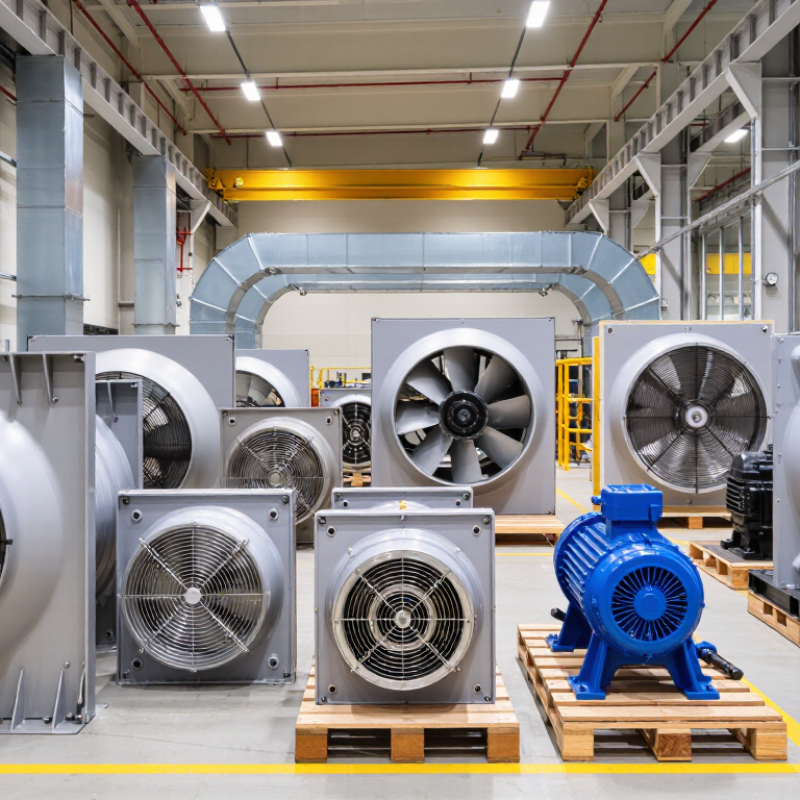
What defines a high-pressure centrifugal fan is not its label, but its verified pressure performance. Unlike axial fans, it uses an impeller and curved housing to convert rotation into airflow against resistance. Pressure is not speed. A suitable model must maintain stable volume flow through filters, ducts, dampers, and process equipment.
Classification varies by region and application, so buyers should request pressure curves, efficiency data, and test conditions. AMCA 210 and ISO 5801 provide recognized methods for measuring fan airflow and pressure. A fan advertised at 5 kPa may perform differently after installation if the system resistance was underestimated.
Check static pressure, total pressure, air density, temperature, and altitude together.
Energy use deserves equal attention. The U.S. Department of Energy reports that motor-driven systems can consume more than 70% of industrial electricity, making fan efficiency a practical purchasing issue. The IEA’s Energy Efficiency 2023 analysis also identifies industrial motor systems as a major global efficiency opportunity.
Look for backward-curved impellers, efficient motors, variable-speed control, and accessible bearings. Inspectors should also examine vibration limits, sound levels, casing thickness, and dust-handling capability. In my experience, a slightly oversized fan often wastes energy through throttling. Yet selecting too small a unit creates noise, overheating, and unstable airflow.

Choosing among the 10 best high pressure centrifugal fans requires more than comparing catalog airflow. Global buyers should check pressure performance at the actual operating point. A fan rated at 10,000 cubic meters per hour may deliver less in a long duct system. Review the fan curve, static pressure, impeller speed, and motor margin together. Energy efficiency matters during continuous operation. A small efficiency difference can become a large operating cost over several years. I also examine bearing access, casing thickness, and corrosion protection before approving a unit.
Tips: Request tested performance data, not only advertised maximum airflow. Confirm inlet temperature, altitude, voltage, frequency, and duty cycle. Ask for vibration limits and balancing records. These details often expose hidden installation risks.
Noise and maintenance deserve equal attention. Measure sound pressure at a stated distance, because “quiet” has no useful meaning without conditions. Check whether the motor can tolerate frequent starts and whether replacement parts are locally available. For hot or dusty environments, verify sealing, material selection, and temperature limits. Safety guards and electrical protection should match the installation requirements in the destination market. Do not assume one configuration suits every country. A perfect selection is rarely possible. Sometimes buyers overlook service access, then discover that a simple bearing inspection requires removing half the ductwork. A pre-shipment inspection can reveal this weakness, although it adds time and cost.
This comparison uses representative industrial duty points for high-pressure centrifugal fans. Airflow, pressure capability, and total efficiency are the main factors global buyers should evaluate before selecting a fan for process ventilation, combustion air, dust collection, and pneumatic conveying.
How to read the chart: Higher pressure supports more demanding systems with duct resistance, filters, and conveying lines, while higher airflow improves system capacity. Efficiency indicates how effectively electrical input is converted into air-moving performance. Final selection should also consider noise, motor voltage, temperature, materials, corrosion resistance, and local certification requirements.
Global buyers need more than a high pressure rating. The right fan must match airflow, static pressure, temperature, duty cycle, and local electrical standards.
Ten leading high-pressure centrifugal fan options include backward-curved, backward-inclined, forward-curved, radial-blade, backward-swept, double-inlet, single-inlet, explosion-resistant, corrosion-resistant, and high-temperature designs.
Each option serves a different operating reality. Backward-curved models often support efficient continuous duty, while radial-blade units handle dust and heavier particles more confidently. Double-inlet construction can deliver high airflow within compact plant layouts.
Space matters.
The U.S. Department of Energy reports that optimized fan systems can often reduce energy use by 20–50%, especially when throttling, leakage, and oversized motors are corrected.
The International Energy Agency also identifies motor-driven systems as a major industrial efficiency opportunity. Buyers should request tested curves, sound data, vibration limits, and efficiency values under actual operating conditions.
AMCA Publication 210 provides a recognized framework for fan performance testing, while AMCA Publication 208 supports fan energy classification.
A 75 kW motor may look adequate on paper, yet poor duct design can waste capacity through pressure loss.
Real sites are messier.
I would also inspect bearing access, filter loading, drainage, and spare-part availability. A perfect selection is rare.
Pressure can be achieved, but not always economically.
Choosing among the 10 best high-pressure centrifugal fans requires more than comparing airflow figures. Efficiency depends on the fan curve, motor performance, system resistance, and operating point. A fan running far from its design point may waste energy and create unstable airflow. Look for measured performance data, not attractive catalog claims. Small details matter, including inlet shape, impeller balance, and bearing quality.
Material selection affects durability in real environments. Coated steel suits many general applications, while stainless steel offers better resistance in humid or corrosive conditions. Aluminum can reduce weight, but it may not suit every high-temperature installation. Noise also deserves careful attention. A powerful fan can produce noticeable tonal noise near a workshop wall or roof opening. Acoustic liners, flexible connectors, and correct speed control can help. However, lower noise does not automatically mean better efficiency. That assumption deserves review.
Tips: Compare sound levels at the same airflow and pressure. Check whether measurements use consistent standards. Ask for service access, replacement intervals, and motor protection details. Inspect vibration limits before purchase. A slightly oversized fan may seem safer, yet frequent throttling can increase energy use. The best choice balances pressure, efficiency, materials, noise, and expected service life rather than chasing one impressive specification.
| Rank | Fan Configuration | Typical Airflow | Maximum Static Pressure | Motor Rating | Energy Efficiency | Impeller Design | Main Materials | Sound Level | Ingress Protection | Operating Temperature | Estimated Service Life | Best-Suited Application | Overall Rating |
|---|---|---|---|---|---|---|---|---|---|---|---|---|---|
| 1 | EC Backward-Curved Fan | 500–2,200 m³/h | 4,500 Pa | 1.5 kW | 78–82% | Backward-curved, non-overloading | Powder-coated steel housing; aluminum impeller | 67–73 dB(A) at 1 m | IP54 | −20 to 50°C | 40,000–60,000 operating hours | Energy-conscious process ventilation and filtration | ★★★★★ |
| 2 | High-Pressure Radial-Blade Fan | 800–3,500 m³/h | 6,000 Pa | 2.2 kW | 65–72% | Radial, open-blade | Welded carbon steel; epoxy-coated surfaces | 74–81 dB(A) at 1 m | IP55 | −10 to 60°C | 35,000–50,000 operating hours | Dust extraction and abrasive-air handling | ★★★★★ |
| 3 | Stainless Steel Process Fan | 700–3,000 m³/h | 5,000 Pa | 2.2 kW | 64–71% | Backward-inclined | 304 stainless steel housing and impeller | 70–77 dB(A) at 1 m | IP55 | −20 to 80°C | 40,000–55,000 operating hours | Food, pharmaceutical, and humid-process environments | ★★★★☆ |
| 4 | Belt-Driven Industrial Fan | 2,000–10,000 m³/h | 3,800 Pa | 4.0 kW | 60–68% | Backward-curved, belt-driven | Heavy-gauge steel casing; galvanized impeller | 72–80 dB(A) at 1 m | IP55 motor | −10 to 70°C | 30,000–45,000 operating hours | Large ventilation systems and centralized extraction | ★★★★☆ |
| 5 | Compact Plug Fan | 600–2,800 m³/h | 3,500 Pa | 1.1 kW | 75–80% | Backward-curved, direct-drive | Galvanized steel housing; composite or aluminum wheel | 64–71 dB(A) at 1 m | IP54 | −20 to 50°C | 35,000–50,000 operating hours | Air-handling units and space-constrained installations | ★★★★☆ |
| 6 | Explosion-Resistant Radial Fan | 900–4,000 m³/h | 4,200 Pa | 3.0 kW | 58–66% | Radial, spark-resistant construction | Steel casing; aluminum or copper-alloy rotating parts | 76–84 dB(A) at 1 m | IP55 | −20 to 60°C | 30,000–45,000 operating hours | Potentially explosive dust or vapor environments | ★★★★☆ |
| 7 | High-Temperature Centrifugal Fan | 1,000–5,000 m³/h | 3,200 Pa | 4.0 kW | 55–64% | Backward-curved, heat-duty impeller | Heat-resistant carbon steel; insulated bearing assembly | 75–83 dB(A) at 1 m | IP55 motor | −20 to 250°C air temperature | 25,000–40,000 operating hours | Ovens, kilns, dryers, and hot-gas exhaust | ★★★★☆ |
| 8 | Double-Inlet Centrifugal Fan | 4,000–18,000 m³/h | 2,800 Pa | 5.5 kW | 62–70% | Double-inlet, forward or backward-curved | Galvanized steel casing; balanced steel impeller | 73–81 dB(A) at 1 m | IP54 or IP55 | −10 to 60°C | 30,000–45,000 operating hours | High-volume HVAC and industrial air circulation | ★★★★☆ |
| 9 | Corrosion-Resistant Coated Fan | 700–3,200 m³/h | 4,000 Pa | 2.2 kW | 60–68% | Backward-curved, sealed construction | Polymer-coated steel; optional stainless fasteners | 69–78 dB(A) at 1 m | IP55 | −20 to 60°C | 30,000–50,000 operating hours | Chemical, marine, and moisture-heavy installations | ★★★★☆ |
| 10 | Variable-Speed Direct-Drive Fan | 400–2,000 m³/h | 3,000 Pa | 0.75 kW | 76–81% | Backward-curved, speed-controlled | Galvanized steel housing; aluminum impeller | 61–69 dB(A) at 1 m | IP54 | −20 to 50°C | 40,000–60,000 operating hours | Demand-controlled ventilation and low-noise systems | ★★★★☆ |
Selection, Installation, and International Purchasing Considerations
Selecting a high pressure centrifugal fan begins with measured system resistance, not catalogue pressure alone. Record airflow, static pressure, temperature, humidity, and altitude at the operating site. A fan rated for 12,000 m³/h may perform poorly after filters, bends, and long ducts are added. Check the full performance curve, efficiency range, motor power, and allowable speed. Avoid choosing the maximum pressure point. It can increase noise and energy use.
Installation details often decide whether the fan reaches its expected life. Mount the housing on a rigid, level base with vibration isolation. Align flexible connectors carefully, because strained connections can distort the casing. Confirm motor rotation before connecting the ductwork. Keep service clearance around bearings, belts, and inspection panels. During commissioning, measure vibration, current, airflow, and outlet pressure. Small errors matter. Noise estimates may also be optimistic.
International purchasing requires more than comparing prices. Confirm voltage, frequency, motor enclosure, control method, and electrical documentation before payment. Request material certificates, factory test records, dimensional drawings, spare-part lists, and a clear packing specification. Verify the destination’s safety and installation requirements with a qualified local engineer. Protect the fan with sealed packaging, corrosion control, and shock indicators for long sea transport. Clarify delivery terms, customs responsibilities, warranty scope, and replacement lead times in writing. A cheaper unit can become expensive when one missing drawing delays installation.