How to Choose a Low Noise High-Pressure Fan for Your Needs?
Choosing the right fan for your needs can be challenging. A Low Noise High-Pressure Fan is essential for various applications. Whether in commercial spaces or industrial settings, noise levels matter. Excessive noise can create discomfort. It might lead to reduced productivity and stress.
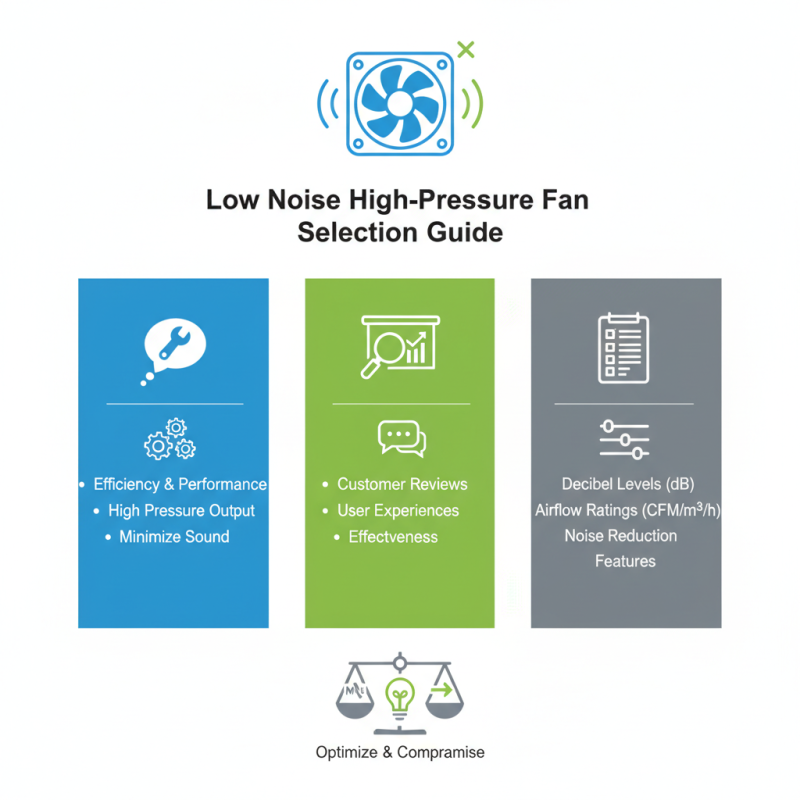
Understanding your requirements is key. Consider the fan’s efficiency and performance. You want a unit that delivers high pressure while minimizing sound. Many manufacturers claim to offer low noise solutions. However, not all fans live up to this promise. Checking customer reviews can provide insights. Users often share their experiences with noise level and effectiveness.
Evaluating specifications is a must. Look for details like decibel levels and airflow ratings. Some fans may have modern features for noise reduction. Yet, they may not achieve high pressure. You might need to balance sound and performance. Reflect on your priorities; sometimes, compromises are necessary to attain the best overall solution.
Understanding the Importance of Low Noise in High-Pressure Fans
In various industrial applications, low noise in high-pressure fans is crucial. A recent report by the European Ventilation Association highlighted that excessive noise can lead to significant productivity loss. Workers exposed to noise levels exceeding 85 dB can experience fatigue and decreased focus. This stresses the need for fans designed with noise reduction in mind.
High-pressure fans are essential in ventilation, cooling, and exhaust systems. However, achieving a balance between performance and noise can be challenging. For instance, fans with lower sound power levels produce less operational noise. Companies that prioritize low noise design report enhanced workplace comfort, leading to higher efficiency. In sharp contrast, poorly designed fans can create disruptive environments, hampering both worker well-being and productivity.
To address these challenges, manufacturers are employing innovative technologies. Advanced blade designs and better motor selection contribute to lower noise emissions. Yet, not all options on the market are equal. It’s vital to evaluate fan specifications, such as noise ratings measured in dB, to make informed choices. Reflecting on the importance of noise control, consider the unique needs of your environment. Balancing noise reduction with performance is not always straightforward but crucial for long-term success.
Key Specifications to Consider When Selecting a Low Noise High-Pressure Fan
When selecting a low noise high-pressure fan, several key specifications play a crucial role. Begin with airflow rate. This is usually measured in cubic feet per minute (CFM). A higher CFM indicates better airflow. However, ensure it meets your specific requirements. Also, consider static pressure, which affects how well a fan moves air against resistance. High static pressure is vital for systems like ducting.
Noise level is another significant factor. Look for fans with decibel ratings that fall within acceptable limits for your environment. A quieter fan enhances comfort in homes or workplaces. Additionally, check the fan's motor type. Brushless motors often offer better performance and longevity along with reduced noise. It’s essential to weigh the balance between performance and sound level.
Finally, think about the fan’s material and design. Some materials may dampen noise better than others. Look for well-engineered designs that inhibit vibrations. Each specification should align with your application's unique needs. Balancing these factors may take time, but it directly impacts your satisfaction and efficiency. Each choice reflects your priorities and investment in quality.
Evaluating Airflow Efficiency: CFM vs. Static Pressure Ratings
Choosing a low noise high-pressure fan requires careful evaluation of airflow efficiency. Two critical metrics to consider are CFM (Cubic Feet per Minute) and static pressure ratings. CFM measures the volume of air a fan can move. A higher CFM indicates better air movement. However, CFM alone does not account for the resistance a fan faces in a duct system. Static pressure ratings illustrate this resistance, showing how effectively a fan can push air through obstacles like filters or bends.
Understanding the relationship between CFM and static pressure is essential. For example, a fan with a high CFM but low static pressure may struggle in a restricted duct. In contrast, a fan tailored for high static pressure can perform efficiently even in challenging conditions. Industry reports often highlight that fans optimized for static pressure can increase system efficiency by up to 30%.
Tips: Always match the fan's CFM to your system's airflow requirements. If unsure, consult performance curves provided by manufacturers to find a suitable balance. Regularly reassess both CFM and static pressure to ensure your setup remains efficient, as conditions may change over time. Don't overlook these factors; an oversight may lead to suboptimal performance.
Comparing Noise Levels: Decibel Ratings in Fan Performance
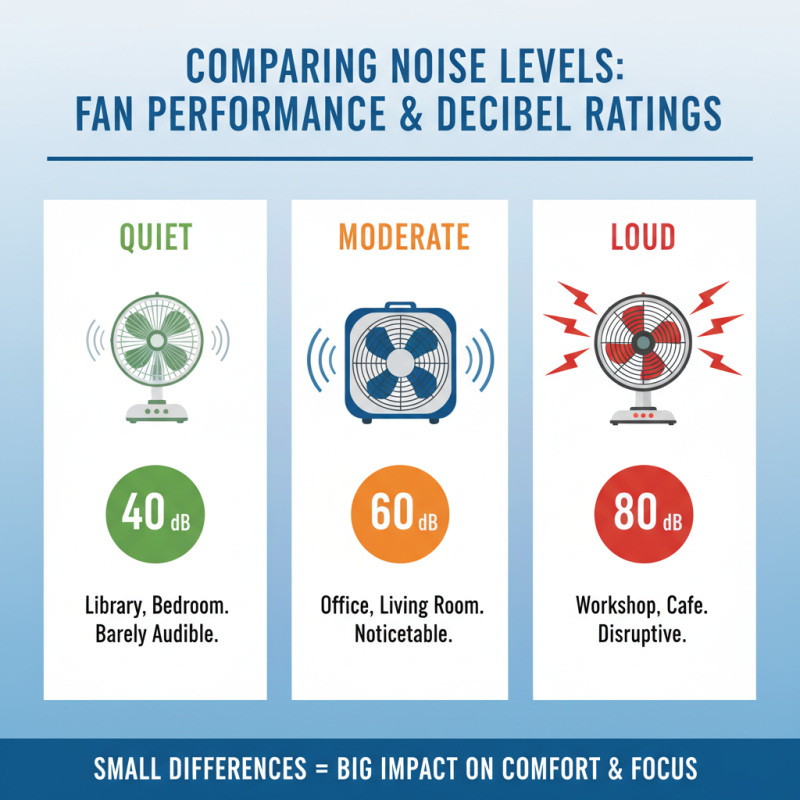
When selecting a low noise high-pressure fan, understanding decibel ratings is essential. Decibels (dB) measure sound intensity. A fan rated at 60 dB is noticeably louder than one at 40 dB. Even small differences can impact the overall experience in quiet settings. Noise levels can affect concentration and comfort, especially in places like offices or bedrooms.
Decibel ratings are not the only factor to consider. The acoustic design of the fan also plays a role. Some fans may have lower dB ratings but produce a harsher sound. Others may have a higher rating but operate more smoothly. This complexity requires careful listening tests, which often get overlooked. Just because a fan claims low noise doesn’t mean it is the best choice.
Additionally, you might face trade-offs. A fan optimized for high pressure may inherently generate more noise. Finding a balance between noise reduction and performance is not always straightforward. Users often have unique preferences, making this selection process personal and subjective. Investing time in research can lead to a more satisfactory choice that meets your needs.
Material and Design Factors that Influence Noise Reduction in Fans
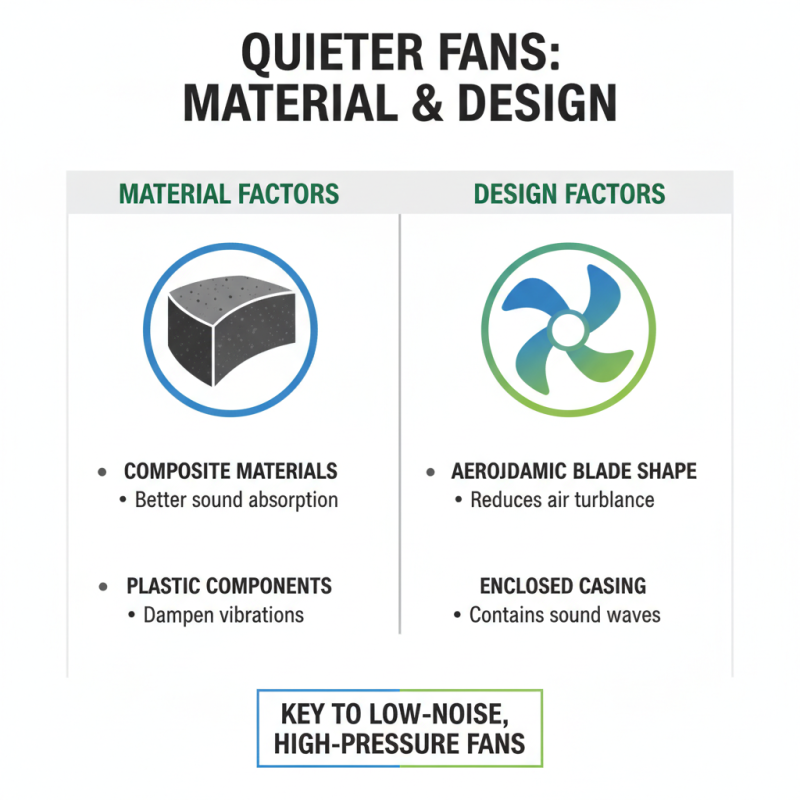
When selecting a low noise high-pressure fan, material and design are crucial for noise reduction. Different materials can absorb or reflect sound waves. For instance, fans made with composite materials often provide better acoustic performance than traditional metals. Plastic components can help dampen vibrations, contributing to a quieter environment.
Design factors also play a significant role in noise levels. The blade shape and orientation influence air movement and turbulence. Blades designed with curved edges typically produce less noise. Additionally, the spacing between blades can impact how smoothly air flows. Poor spacing may increase noise through turbulence.
Taking all factors into account is essential when evaluating a fan's performance. It’s easy to overlook how these details contribute to overall noise levels. Testing different options can be beneficial. Measuring real-life noise levels helps ensure the fan meets your specific needs. Sometimes, even minor adjustments can lead to significant improvements in sound reduction.