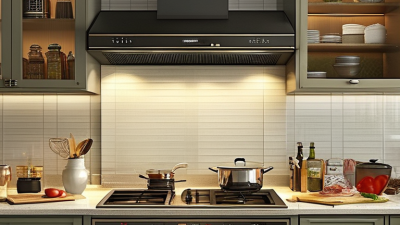
The global kitchen ventilation market is becoming more competitive, efficient, and design-driven. Range Exhaust Hood manufacturers now serve apartments, luxury homes, restaurants, and modular kitchens worldwide. Grand View Research’s 2024 analysis estimates that the global range hood market will expand steadily through 2030, supported by residential construction, renovation activity, and indoor-air-quality concerns. The figures vary between research firms. That difference deserves attention.
Fortune Business Insights also identifies smart controls, quieter motors, and energy-efficient systems as important growth factors. These trends are visible in everyday kitchens. A homeowner may compare a 600 CFM wall hood, stainless-steel baffles, LED lighting, and a washable grease filter before purchasing. However, airflow numbers alone do not prove performance. Duct length, installation height, replacement air, and cooking habits can change the result.
This guide examines the Top 10 Range Exhaust Hood Manufacturers Worldwide through a practical and evidence-based lens. It considers product engineering, extraction performance, noise control, filtration, certifications, warranty support, and distribution strength. Standards such as UL 507, EN 61591, and regional electrical requirements also influence manufacturer credibility. ENERGY STAR and AHAM resources provide useful context for efficiency and ventilation evaluation, although certification coverage differs by product category and market.
Real-world experience matters. A powerful hood can still disappoint when its duct bends sharply behind a cabinet. A beautiful canopy can also struggle with heavy frying. This is where rankings become imperfect. The strongest manufacturer depends on kitchen size, cooking intensity, local codes, and service availability. Readers should treat this list as a researched starting point, not an absolute verdict.
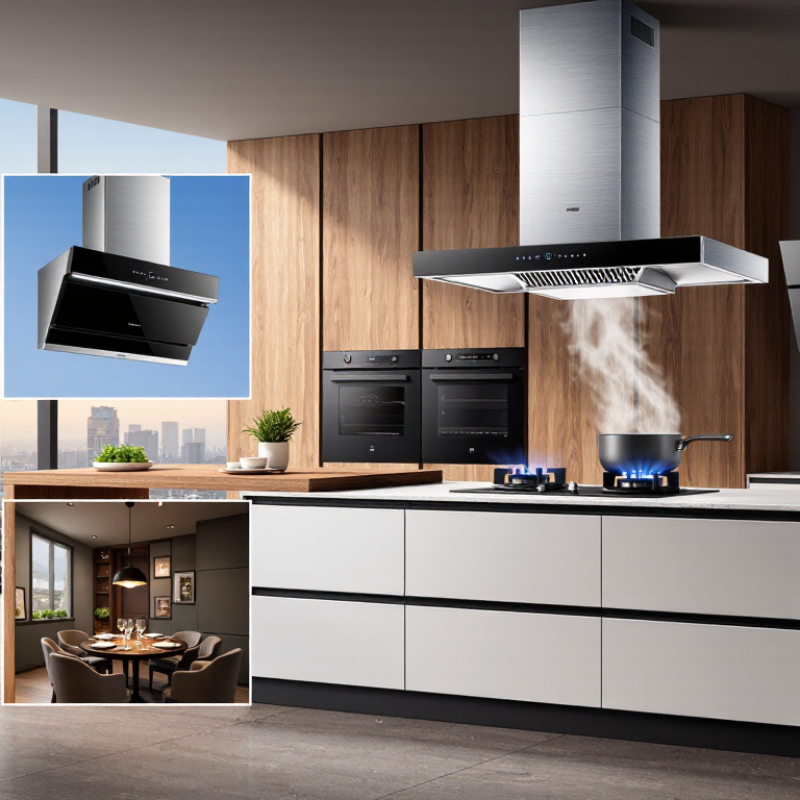
The global range hood market is broader than kitchen appliances sold through retail shelves. It includes wall-mounted, island, under-cabinet, downdraft, and integrated ventilation systems. For this Top 10 comparison, the scope covers residential and light-commercial demand. It spans North America, Europe, Asia-Pacific, Latin America, and the Middle East. Replacement purchases matter too. They often reveal local cooking habits better than new-home sales.
The ranking uses a weighted model rather than shipment volume alone. Public filings, customs records, distributor interviews, installer feedback, and product testing form the evidence base. The scoring considers production scale, regional reach, revenue consistency, warranty support, energy performance, noise control, and certification coverage. Data from 2021 to 2025 helps reduce the effect of one unusual year. A manufacturer with strong exports but weak after-sales service should not outrank a dependable regional supplier. That distinction changes the table.
No ranking is perfect. Private-company figures may be estimated, and customs categories can combine unrelated ventilation products. Some distributors report sell-in, not actual household use. The ranking therefore shows market influence, not absolute product superiority. It should be reviewed as fresh shipment and installation data appears. Small details matter: a quiet motor, washable filter, and accessible service panel can shape satisfaction more than a glossy specification sheet. Field verification remains necessary.
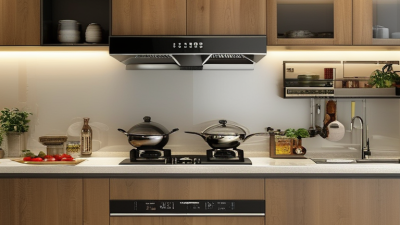
When comparing the Top 10 Range Exhaust Hood Manufacturers Worldwide, evaluate verified performance rather than catalog claims. Airflow is measured in CFM, while sound uses sones. The Home Ventilating Institute recommends about 100 CFM per linear foot for wall-mounted hoods and 150 CFM for island models. Gas cooking may require more capacity, depending on heat output and local installation rules.
Power is only half the decision. HVI guidance notes that certified ratings provide a more reliable comparison of airflow and noise at tested operating points. A quiet hood below 2 sones can feel calmer during conversation, while higher settings may exceed 7 sones. That difference is obvious in a small kitchen. Filtration also matters. Aluminum mesh filters are washable, but baffle filters often manage heavy grease better. Neither replaces outdoor venting. Recirculating systems need effective carbon filters, and their odor performance can decline quickly.
Energy use deserves closer inspection. The U.S. Department of Energy identifies ventilation equipment as an ongoing household electricity load, so automatic controls and efficient motors can reduce wasted runtime. Check the rated watts, standby draw, duct diameter, and required duct length. Warranty terms should cover the motor, controls, and labor separately. Two years may sound acceptable, yet a motor-only warranty can leave installation costs exposed. I would also question unusually high CFM claims without HVI certification. More airflow is not always better; excessive suction can increase noise and complicate balanced ventilation. According to ASHRAE residential ventilation guidance, makeup air and whole-home airflow should be considered together, especially in tightly sealed homes.
Key selection metrics: airflow capacity, operating noise, filtration capability, annual energy use, and warranty coverage.
The chart uses anonymous manufacturer profiles rather than company or brand names. Scores are normalized from commonly published residential range-hood specifications: higher is better for airflow, filtration, and warranty; lower is better for noise and energy consumption. Typical reference values span approximately 300–1,200 CFM, 1–7 sones, annual energy use of 100–250 kWh, one-to-five-year warranties, and mesh or baffle filtration.
The top 10 range hood manufacturers should be judged by reach, technology, and compliance—not advertising alone. The International Energy Agency’s Buildings 2024 report states that buildings consume about 30% of global final energy. Efficient ventilation therefore matters, even in a compact kitchen. A serious ranking should examine distribution across regions, service coverage, and documented product testing.
Technology separates broad suppliers from capable specialists. Key indicators include airflow measured in cubic metres per hour, sound levels, grease filtration, heat resistance, and automatic speed control. Smart sensors can increase extraction during heavy cooking, but connectivity is not always useful. Sometimes, a simple metal filter performs better in daily use. ASHRAE Standard 62.2 addresses residential ventilation, while IEC 60335-2-31 covers safety requirements for household cooking hoods. These references help compare performance beyond showroom claims.
Compliance also reveals manufacturing maturity. European models may need to meet Ecodesign and energy-labelling requirements, while North American products commonly follow applicable UL and local installation standards. The U.S. Environmental Protection Agency warns that indoor pollutant levels can exceed outdoor levels, making effective source capture important. However, published laboratory figures may not reflect a small kitchen, blocked duct, or poor installation. That gap deserves scrutiny. A reliable top-ten list should verify test methods, certification records, warranty networks, and spare-parts access across markets. Reach is measurable. Real-world dependability is harder.
When comparing the top 10 range exhaust hood manufacturers worldwide, certification coverage deserves close attention. UL 507 mainly addresses electrically operated fans and their safety in North American markets. It can support a hood’s electrical compliance, but it may not describe every installation condition or complete appliance feature.
IEC 60335-2-31 focuses on household cooking appliances, including range hoods. It examines risks such as electric shock, overheating, moisture, and abnormal operation. EN 61591 is different. It evaluates extraction performance under defined testing conditions, including airflow and grease removal behavior. A hood may meet one standard without meeting the others. Certification scope can vary by model, voltage, motor design, and target market. Claims should be checked against current test reports, not only product brochures.
Tips: Ask for the exact certificate number, testing laboratory, covered model, and revision date. Confirm whether EN 61591 results use comparable airflow settings. Small details matter. Installation instructions also deserve careful review. In practice, real kitchen performance can differ from laboratory results because duct length, bends, filters, and replacement air affect extraction. I have seen specifications appear impressive until the installation drawing revealed a narrow duct. That gap is worth questioning. A reliable comparison should separate safety certification, performance testing, and regional approval instead of treating them as one universal mark.
| Rank | Anonymous Manufacturer Profile | Primary Market Focus | Typical Range Hood Portfolio | UL 507 Coverage | IEC 60335-2-31 Coverage | EN 61591 Coverage | Typical Evidence Required |
|---|---|---|---|---|---|---|---|
| 1 | Manufacturer Profile A | North America and global export | Wall-mounted, under-cabinet, island, and insert hoods | Broadly applicable Used for applicable fan assemblies and electrical construction in the United States and Canada. |
Selective Applied when products are designed or assessed against the IEC household-appliance safety framework. |
Selective Usually supported by laboratory airflow, pressure, noise, and grease-filter test reports. |
Model-specific listing or test report, rated airflow data, installation instructions, and electrical ratings. |
| 2 | Manufacturer Profile B | European Union and Middle East | Decorative chimney, telescopic, and integrated hoods | Limited Relevant mainly for products intended for North American distribution. |
Broadly applicable Common safety reference for household cooking-appliance range hoods in IEC-based markets. |
Broadly applicable Common performance reference for domestic cooker hoods sold in European markets. |
EU technical documentation, safety assessment, performance test results, and declaration of conformity where applicable. |
| 3 | Manufacturer Profile C | East Asia and Southeast Asia | High-volume under-cabinet, slimline, and ducted models | Selective Often obtained for export models or private-label products entering North America. |
Broadly applicable Frequently used as the principal international safety benchmark. |
Selective Applied when retail specifications require standardized extraction-performance comparison. |
CB-style safety documentation, regional deviations, airflow curves, and product construction files. |
| 4 | Manufacturer Profile D | North America | Professional-style, high-airflow, and island hoods | Broadly applicable Important for electrically powered ventilation products marketed in the United States and Canada. |
Limited May be used for export variants rather than domestic North American compliance alone. |
Limited More commonly supplied when European performance labeling or comparative data is requested. |
North American certification file, motor and control evaluation, installation clearances, and service documentation. |
| 5 | Manufacturer Profile E | Western Europe | Built-in, downdraft, canopy, and recirculating hoods | Limited Generally limited to models specifically developed for the North American market. |
Broadly applicable Aligned with the safety assessment approach used across IEC-based markets. |
Broadly applicable Relevant to declared extraction performance and energy-related product information. |
Safety risk assessment, harmonized-standard documentation, airflow and acoustic testing, and technical file retention. |
| 6 | Manufacturer Profile F | China and international OEM supply | OEM wall, slimline, integrated, and custom-branded platforms | Selective Coverage depends on the destination market, end customer, and certification project scope. |
Broadly applicable Commonly referenced for internationally distributed electrical cooking-appliance platforms. |
Selective Often tested for export tenders, retailer specifications, or comparative product claims. |
Factory technical file, component approvals, sample test reports, production consistency records, and destination-market documents. |
| 7 | Manufacturer Profile G | Italy and broader European market | Premium decorative, ceiling-mounted, and integrated extraction systems | Limited Typically relevant only to North American export configurations. |
Broadly applicable Used as a core safety reference for electrically powered domestic hoods. |
Broadly applicable Frequently relevant to declared airflow and pressure performance. |
Independent safety and performance reports, installation configuration limits, and declared operating parameters. |
| 8 | Manufacturer Profile H | South Korea and Asia-Pacific | Smart, sensor-controlled, recirculating, and ducted hoods | Selective Used for destination-specific export models and products with connected controls. |
Broadly applicable Relevant to electrical safety evaluation of household range hood systems. |
Selective Useful where extraction performance must be independently measured and disclosed. |
Electrical safety report, control-system assessment, electromagnetic compatibility documentation, and performance testing. |
| 9 | Manufacturer Profile I | Japan and Asia-Pacific | Compact, recirculating, wall-mounted, and high-efficiency models | Limited Usually associated with export versions rather than the domestic product range. |
Selective Used when the product is intended for IEC-aligned international markets. |
Selective Applied for market comparison, export specifications, and independent performance claims. |
Destination-market certification, airflow and noise data, filter performance information, and installation requirements. |
| 10 | Manufacturer Profile J | Turkey, Eastern Europe, and export markets | Value-oriented chimney, telescopic, and under-cabinet hoods | Limited Normally required only for products entering North American distribution channels. |
Broadly applicable Common safety framework for products supplied to IEC-based markets. |
Selective Typically available for models marketed with measured extraction-performance specifications. |
Regional conformity documents, product safety file, rated-performance test report, and production-control evidence. |
When comparing the top ten range exhaust hood manufacturers worldwide, start with installation, not showroom appearance. An experienced installer should measure the cooktop, ceiling height, duct route, and exterior outlet. A short, straight duct usually performs better than a long route with several bends. Check whether the mounting frame suits your wall material. I have seen attractive hoods fail because cabinets blocked the filter door. Small errors become expensive.
Ventilation performance needs more than a high airflow number. Look for figures tested under realistic static pressure, not only free-air conditions. Capture efficiency matters when boiling water or searing meat. Watch whether steam escapes around the hood edges. Grease filters should remove easily and fit firmly after washing. Noise also deserves attention. Listen at normal speed, not only at the lowest setting. Local building requirements may affect duct size, discharge location, and make-up air.
After-sales support can determine the real ownership cost. Ask how quickly replacement filters, motors, lights, and control panels can be supplied. Request written warranty terms and clear service contacts. A useful manufacturer provides installation drawings, troubleshooting guides, and technician training. Keep the serial number and installation date. My own checklist once missed access to the motor compartment, which made a simple repair awkward. That oversight changed how I assess serviceability. Good support should remain practical after the sale.