10 Best Axial Flow Fans for Industrial Use?
Selecting the right equipment for a factory is rarely as simple as comparing airflow numbers. The question, “10 Best Axial Flow Fans for Industrial Use?” demands closer inspection. An Axial Flow Fan can move large air volumes efficiently through warehouses, workshops, tunnels, and process areas. However, performance changes with duct resistance, temperature, dust, humidity, and installation height. A fan that works quietly in a clean warehouse may struggle beside a hot production line.
This guide evaluates ten industrial fan options using practical selection criteria. These include airflow capacity, static pressure, motor efficiency, noise, corrosion resistance, maintenance access, and safety features. Real operating conditions matter. A steel mill, for example, may require heat-resistant components and a sealed motor. A food-processing facility may prioritize cleanable surfaces and controlled airflow. Product documentation, recognized testing practices, warranty terms, and supplier support also deserve attention.
No shortlist is perfect. Ratings can shift when operating conditions change. Marketing claims may appear impressive until measured at the actual duty point. For that reason, this comparison avoids treating one specification as decisive. It considers how each fan may perform over long working hours, during seasonal temperature changes, and under routine maintenance demands. Readers should still confirm fan curves, electrical requirements, noise limits, and local installation rules with qualified professionals. Small details matter. A misplaced guard or poorly supported frame can create avoidable problems. The goal is not to name a universal winner, but to identify dependable choices for different industrial priorities.
What Defines an Industrial Axial Flow Fan?
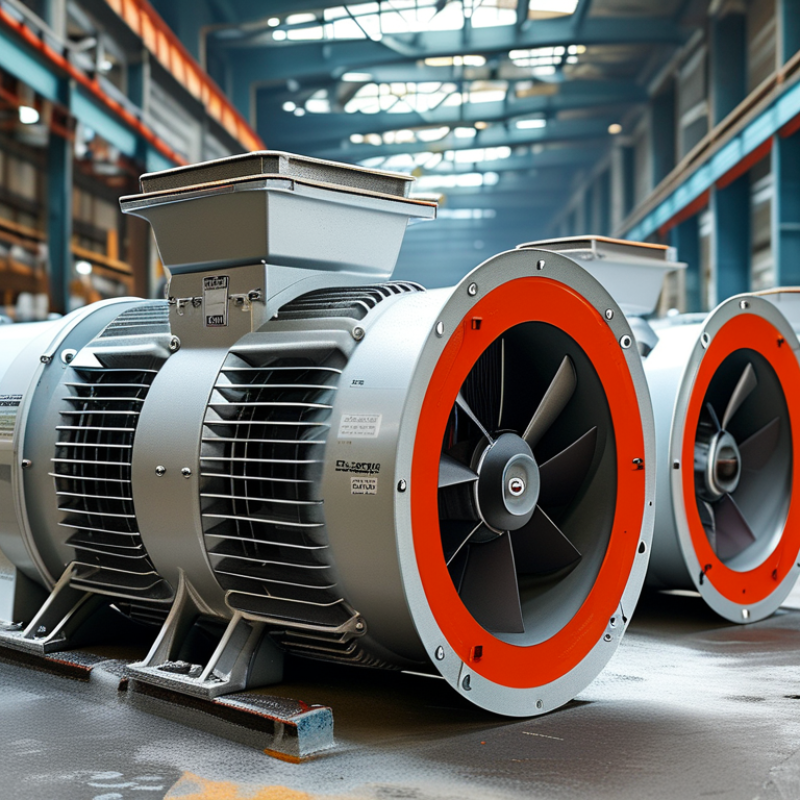
An industrial axial flow fan moves air mainly parallel to its rotating shaft. That geometry alone does not make every axial fan industrial. Industrial duty depends on the working environment, operating schedule, and required performance. ISO 13349 describes fans by their airflow function, while industrial selection adds practical demands. A suitable unit must deliver stable airflow and pressure at a defined speed. It should also withstand dust, heat, moisture, vibration, and long operating hours. Construction matters. Balanced rotors, protected bearings, strong housings, and safe guards reduce maintenance risks.
The U.S. Department of Energy’s Improving Fan System Performance sourcebook reports that fan systems can represent roughly 10% of electricity use in industrial facilities. Continuous operation makes small efficiency losses expensive. AMCA 208 defines Fan Energy Index as a comparison between actual electrical input and reference power. A higher value generally indicates better efficiency at the rated duty point. However, catalog efficiency can mislead. Changing filters, duct resistance, or air density may shift real performance. That is the imperfect part. The selected fan may look efficient on paper but struggle in service.
Tips: Specify airflow, static pressure, temperature, sound level, and operating hours. Request test data based on AMCA 210 or ISO 5801 procedures. Check performance at the actual operating point. An oversized fan can waste power through throttling. An undersized fan may never achieve the required ventilation rate. Maintenance teams should inspect vibration, blade buildup, bearing temperature, and belt tension regularly. Small defects become costly when the fan runs every day.
10 Best Axial Flow Fan Configurations for Industrial Use
Axial flow fans are selected according to airflow capacity, fan diameter, motor input, and air velocity. The comparison below uses representative industrial configurations with common fan sizes and performance ranges.
Airflow values are representative rated capacities for industrial axial fans operating under standard air conditions. Actual performance varies with system resistance, blade design, speed, and installation.
Ten Leading Axial Flow Fans for Industrial Applications
Ten Leading Axial Flow Fans for Industrial Applications
Selecting the ten best axial flow fans starts with the application, not the catalogue. Tube axial fans suit ducted ventilation, while vane axial models deliver stronger pressure control. Propeller fans move large air volumes through open walls and roofs. Bifurcated designs help isolate motors from hot, dusty, or corrosive air. Reversible fans support tunnels and emergency airflow, but efficiency can drop in reverse operation. That detail is often missed.
The U.S. Department of Energy reports that fan systems can represent a significant share of industrial electricity use, especially when throttling wastes pressure. The International Energy Agency also estimates that electric motor systems consume about half of global electricity. Therefore, motor efficiency, impeller balance, and control strategy matter as much as airflow. A variable-speed drive can reduce energy use sharply at partial load. The result depends on the duty cycle. Real measurements beat assumptions.
A practical ten-fan shortlist should compare airflow, static pressure, noise, ingress protection, temperature rating, and maintenance access. Check performance data against AMCA-certified testing methods, not only advertised maximum volume. During site inspections, technicians should examine vibration, bearing temperature, belt tension, and dust buildup around blades. Small errors become expensive. One common mistake is choosing the largest fan available. Oversizing may create unstable operation, excess noise, and unnecessary energy demand. I would also question every published efficiency figure when system resistance, filter loading, and installation clearance remain unknown.
10 Best Axial Flow Fans for Industrial Use? - Ten Leading Axial Flow Fans for Industrial Applications
| Rank |
Fan Configuration |
Recommended Application |
Impeller Diameter |
Typical Motor Power |
Maximum Airflow |
Maximum Static Pressure |
Typical Speed |
Typical Efficiency |
Protection Rating |
Operating Temperature |
| 1 |
Heavy-Duty Tube-Axial Fan |
Process ventilation and large industrial workshops |
800 mm |
5.5 kW |
24,000 m³/h |
650 Pa |
980 rpm |
Up to 78% |
IP55 motor enclosure |
-20°C to 50°C |
| 2 |
High-Pressure Tube-Axial Fan |
Duct systems with filters, louvers, and moderate resistance |
630 mm |
4.0 kW |
16,500 m³/h |
900 Pa |
1,450 rpm |
Up to 75% |
IP55 motor enclosure |
-20°C to 50°C |
| 3 |
Large-Diameter Low-Speed Fan |
Warehouses, logistics centers, and general air movement |
1,000 mm |
2.2 kW |
28,000 m³/h |
280 Pa |
720 rpm |
Up to 82% |
IP55 motor enclosure |
-20°C to 45°C |
| 4 |
Reversible Axial Fan |
Mining, tunnels, underground garages, and reversible extraction |
710 mm |
7.5 kW |
21,000 m³/h |
750 Pa |
1,480 rpm |
Up to 72% |
IP55 motor enclosure |
-20°C to 50°C |
| 5 |
Roof-Mounted Axial Extractor |
Factory roof exhaust and heat removal |
560 mm |
1.1 kW |
10,500 m³/h |
220 Pa |
960 rpm |
Up to 70% |
IP55 motor enclosure |
-20°C to 50°C |
| 6 |
Wall-Mounted Propeller Fan |
Agricultural buildings, workshops, and side-wall ventilation |
900 mm |
1.5 kW |
30,000 m³/h |
180 Pa |
720 rpm |
Up to 80% |
IP55 motor enclosure |
-20°C to 45°C |
| 7 |
Explosion-Resistant Axial Fan |
Areas where flammable gases or vapors may be present |
500 mm |
1.5 kW |
8,500 m³/h |
450 Pa |
1,450 rpm |
Up to 68% |
IP55; hazardous-area configuration required |
-20°C to 40°C |
| 8 |
High-Temperature Axial Fan |
Kilns, furnaces, boiler rooms, and hot-air extraction |
630 mm |
5.5 kW |
13,500 m³/h |
600 Pa |
1,450 rpm |
Up to 70% |
IP55 motor enclosure |
Up to 150°C with suitable motor cooling |
| 9 |
Belt-Driven Axial Fan |
Continuous-duty ventilation requiring adjustable speed |
1,120 mm |
7.5 kW |
38,000 m³/h |
500 Pa |
450–900 rpm |
Up to 76% |
IP55 motor enclosure |
-20°C to 50°C |
| 10 |
Compact Direct-Drive Axial Fan |
Machine cooling, electrical rooms, and localized extraction |
315 mm |
0.37 kW |
3,200 m³/h |
300 Pa |
1,450 rpm |
Up to 72% |
IP54 or IP55 motor enclosure |
-20°C to 45°C |
Technical values are representative industrial performance figures for the stated fan configurations. Actual airflow, pressure, efficiency, noise, temperature limits, and hazardous-area suitability depend on impeller design, operating point, motor selection, installation conditions, and applicable local standards.
Comparing Performance, Efficiency, Noise, and Maintenance Needs
Choosing among the 10 best axial flow fans for industrial use requires more than comparing airflow ratings. Performance depends on volume, static pressure, blade design, and system resistance. A fan moving 20,000 cubic meters per hour may underperform when filters become clogged. Check the duty point, not just the maximum rating. In a workshop, measure airflow near the occupied zone, where heat and fumes collect. Small installation errors matter.
Efficiency should be judged across the expected operating range. A variable-speed motor can reduce energy use during cooler shifts, but frequent changes may complicate controls. Compare power consumption at the required airflow, using measured data where possible. Noise also deserves practical testing. A low laboratory rating may feel harsh beside a metal workstation. Listen at one meter and at the operator’s position. Tonal blade noise can be more irritating than a steady hum. Acoustic panels may help, although careless placement can restrict airflow.
Maintenance needs often decide whether a fan stays reliable. Look for accessible bearings, removable guards, corrosion-resistant housings, and clear lubrication intervals. Inspect belts, fasteners, vibration, and dust buildup during scheduled checks. Drainage around outdoor equipment is easy to overlook. Standing water can shorten service life. Airflow may decline within months when cleaning becomes optional. That assumption is risky. Maintenance estimates can remain imperfect, especially in dusty or humid sites. Leave room for real conditions, not brochure promises.
How to Select the Right Axial Flow Fan for Your Facility
How to Select the Right Axial Flow Fan for Your Facility
Selecting an axial flow fan begins with the duty point, not the catalog photograph. Measure required airflow, static pressure, air temperature, and operating hours. A fan moving 40,000 cubic feet per minute may fail if duct resistance is underestimated. It happens more often than expected.
The U.S. Department of Energy identifies fan systems as major industrial energy users, with savings often available through proper sizing and controls. The International Energy Agency reports that motor-driven systems consume about 53% of global electricity. This makes efficiency more than a purchasing detail. Compare performance at the actual duty point, not only the maximum airflow. Variable-speed control can reduce energy use during partial-load operation, although poor control settings may erase those gains.
Inspect the environment carefully. Hot air, dust, moisture, and corrosive vapors require suitable materials, motor protection, and enclosure ratings. Check noise levels near operators, access for cleaning, bearing life, and replacement-part availability. Use certified performance data where possible, such as testing aligned with AMCA or ISO methods. In practice, the “best” fan is rarely the largest one. A smaller unit may run efficiently, but only if it maintains airflow during filter loading and seasonal changes. Leave room for doubt, then verify the selection with field measurements.